
Add hand-drawn visuals to Google Slides with Drawify
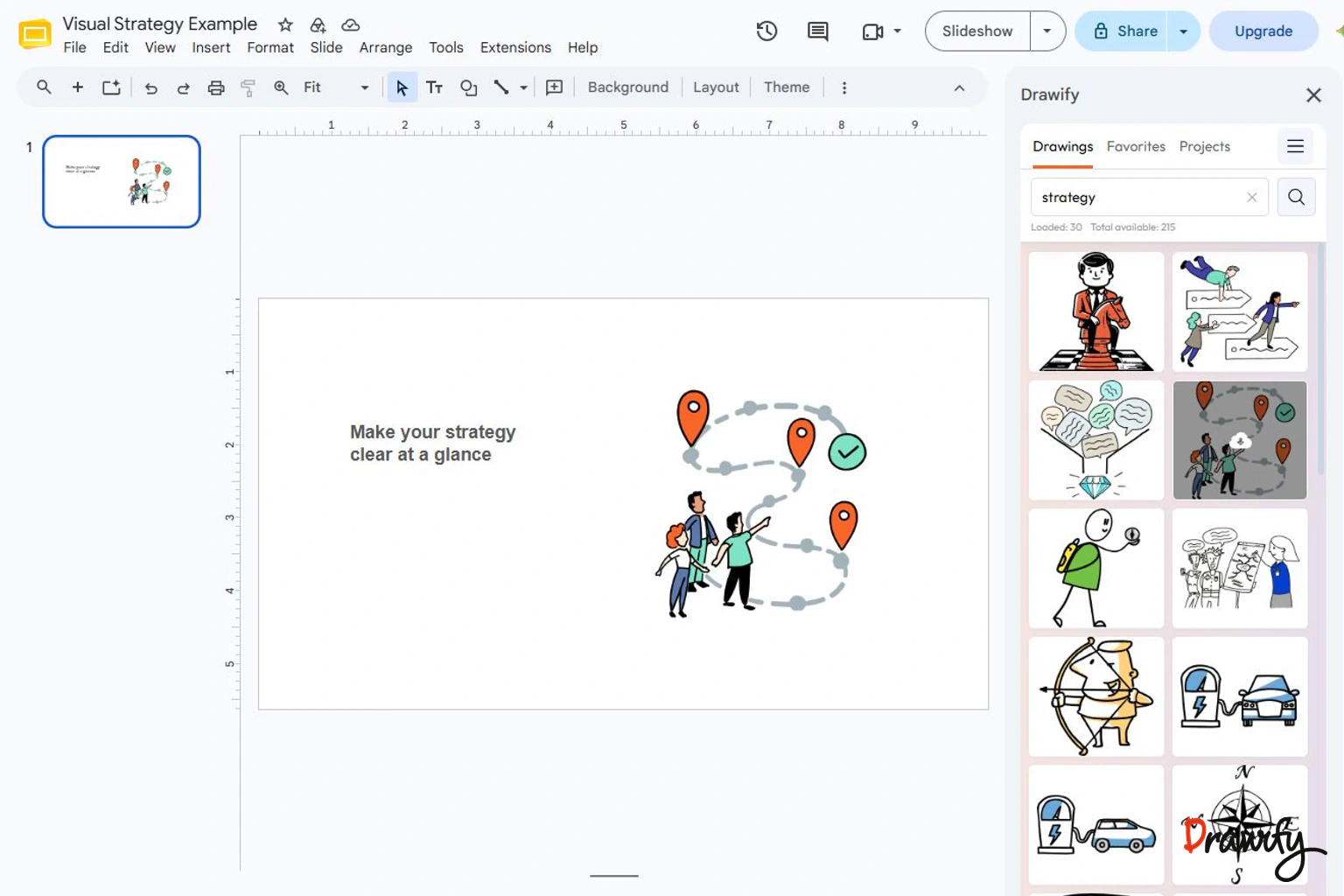
Use the Drawify add-on to find hand-drawn illustrations, icons and graphics while you work in Google Slides. Open Drawify from your presentation, browse the available visual assets and insert the visual you need into the active deck without leaving Google Slides.
Free of charge in the Google Workspace Marketplace. Review the requested permissions before installation.
What can you do with Drawify in Google Slides?
Browse visual assets inside your presentation
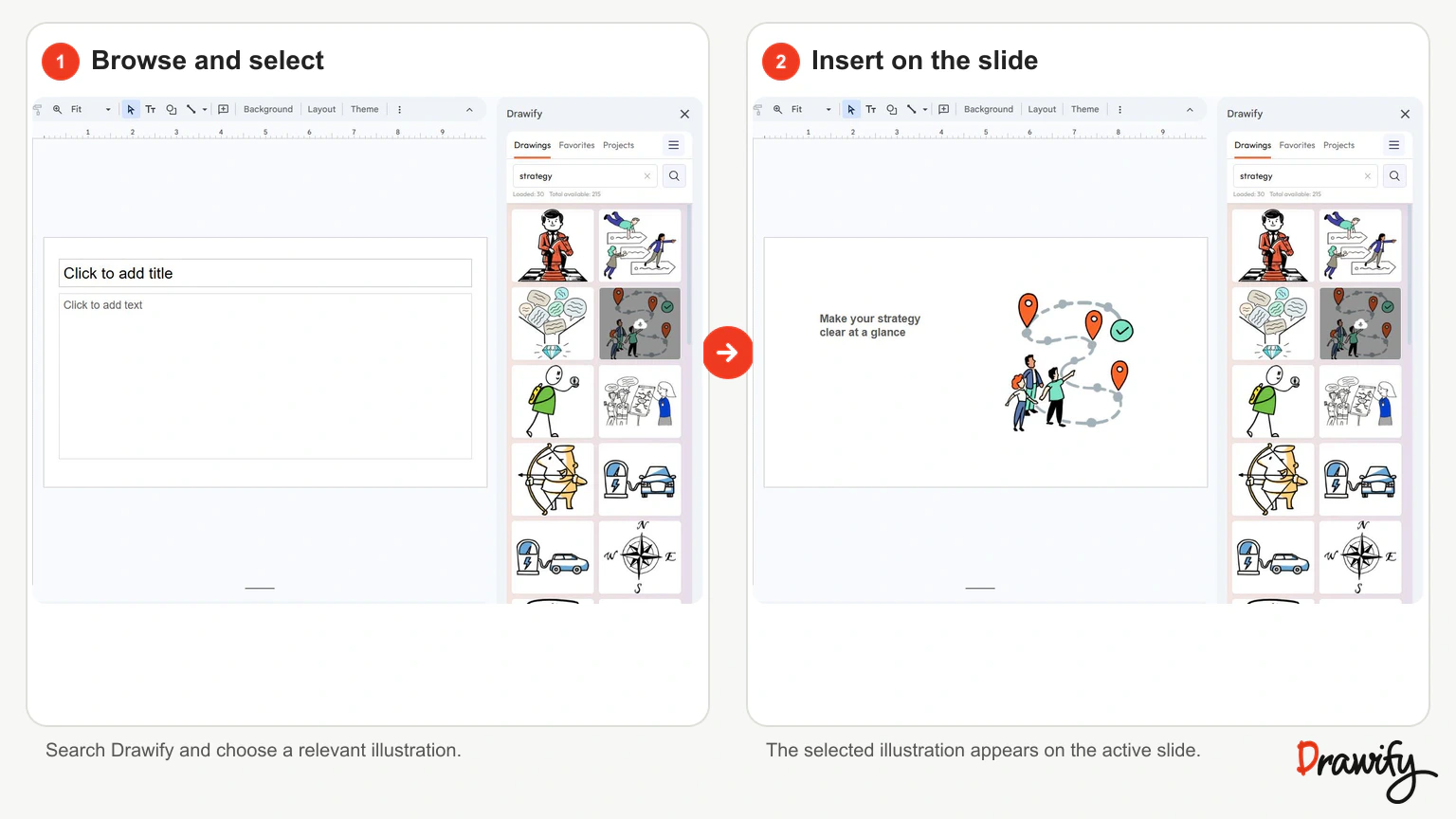
Open the Drawify add-on from Google Slides and browse ready-made illustrations, icons, graphics and creative assets without opening a separate image-search workflow.
Add a selected visual to a slide
Choose a visual that supports the point you are making and insert it into the presentation.
Position it near the relevant heading, explanation, process step or example, then use Google Slides to complete the slide layout.
Give abstract ideas a visual cue
Hand-drawn people, objects and symbols can help identify roles, situations, changes and relationships.
The visual should support the message on the slide rather than replace the explanation.
Use Drawify visuals across different presentation types
The add-on can support business presentations, workshop decks, training material, classroom slides and other presentations where a clear visual example is useful.
How to use Drawify in Google Slides
1. Install the Drawify add-on
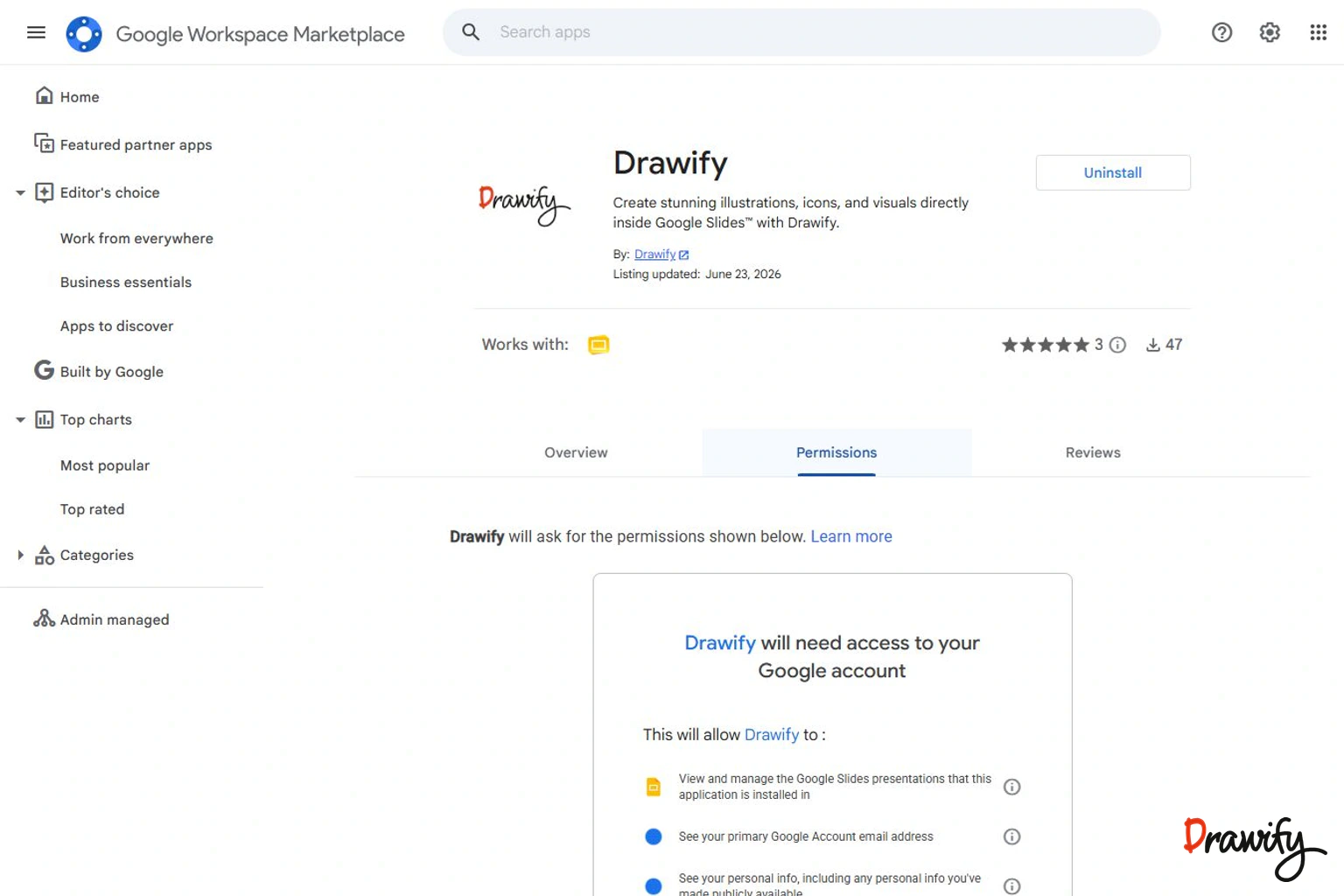
Open the Drawify listing in the Google Workspace Marketplace and select Install.
Google will ask you to continue with a Google account and review the access requested by the add-on.
You can also start from a presentation on a computer by opening Extensions, choosing Add-ons, and selecting Get add-ons.
2. Review the requested access
The current Marketplace listing says Drawify requests permission to:
- view and manage the Google Slides presentations in which the application is installed;
- see the primary email address for the Google account; and
- see basic personal information associated with the account, including information made publicly available.
Read Google's installation screen and follow your organisation's add-on policy before allowing access.
3. Open or create a Google Slides presentation
Open the presentation you want to work on.
If Drawify does not appear immediately after installation, refresh the presentation.
4. Open Drawify from Google Slides
Select the Drawify add-on from the Google Slides side panel to open its visual browser within the presentation workspace.
5. Browse for a relevant visual
Look for an illustration, icon or graphic that matches the idea you need to explain.
Start with the meaning of the slide: the audience, action, obstacle, outcome or relationship you want people to notice.
6. Insert the visual into the slide
Add the selected Drawify asset to the active presentation.
Place it where it supports the reading order and keep enough space for the slide's essential text.
7. Finish the slide in Google Slides
Use Google Slides to arrange the inserted visual with your title, text, shapes and other slide elements.
Check that the visual is large enough to recognise when the deck is presented, not only while you are editing it.
Where Drawify visuals can help in a presentation
Strategy and transformation
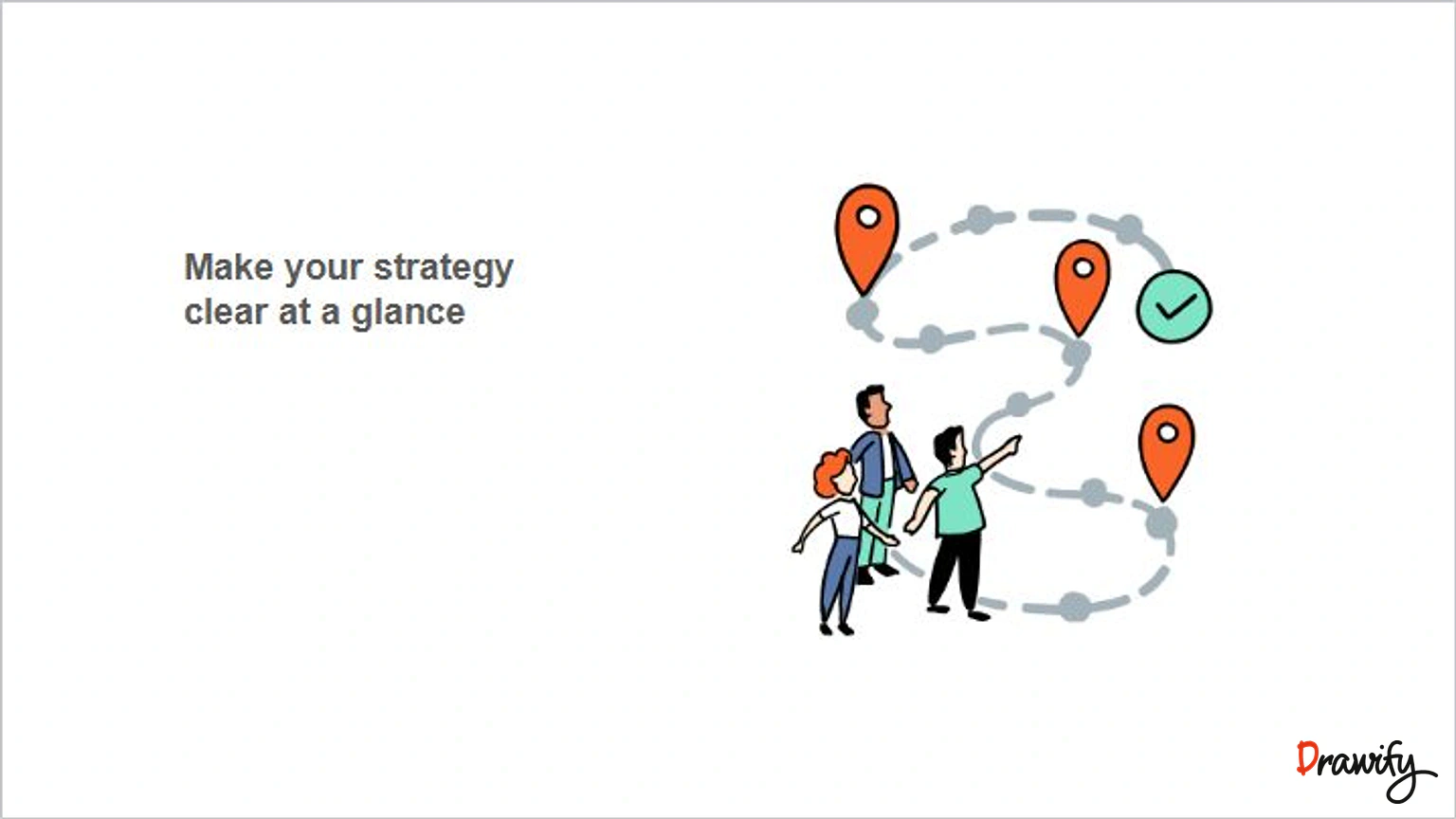
Use a hand-drawn visual to distinguish a current situation, a future direction, an obstacle, an opportunity or a person affected by a change.
Keep the evidence, decisions and actions in the surrounding slide content.
Process explanations
Add a visual cue to important steps, handoffs or outcomes in a process. A visual can make stages easier to recognise, while arrows, labels and sequence remain part of the slide structure.
Workshops and meetings
Use illustrations to introduce an activity, represent participant roles or mark the result a group is working toward.
Training and education
Pair an illustration with a definition, example or question. Avoid using an image as a substitute for the explanation students or participants need.
Client and stakeholder presentations
Use a restrained hand-drawn visual to make an abstract business idea more concrete.
One relevant illustration normally communicates more clearly than several unrelated decorative images.
Using the add-on versus composing in Drawify
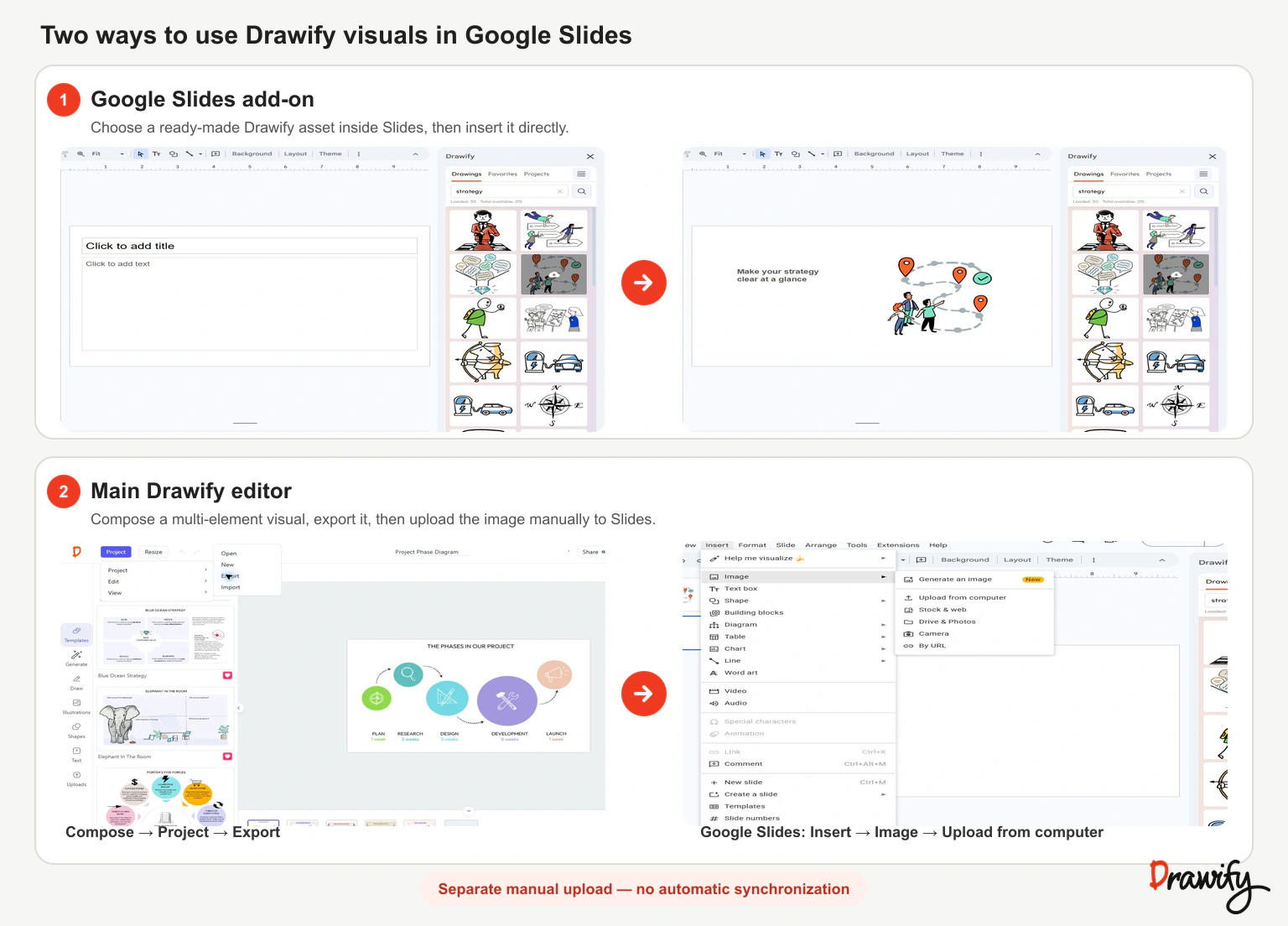
Use the Google Slides add-on when you need a ready-made illustration, icon or graphic while building a slide.
Use the main Drawify platform when you need to compose a complete visual story from several illustrations, text and layout elements.
Drawify supports exporting compositions as PNG, JPEG and PDF.
If you use this route for a Slides presentation, export an appropriate image format and add the exported file to Google Slides as a separate, manual step.
The current public product information does not establish direct Drawify-project import, project synchronisation or two-way editing between Drawify and Google Slides.
Do not describe this workflow as automatic sync.
Get visualisation tips every week
Subscribe to the Drawify Newsletter, and feed your creativity with visualisation tips and techniques, as well as the latest Drawify workshops, news and resources.