
How to start an effective meeting, organize, presentation
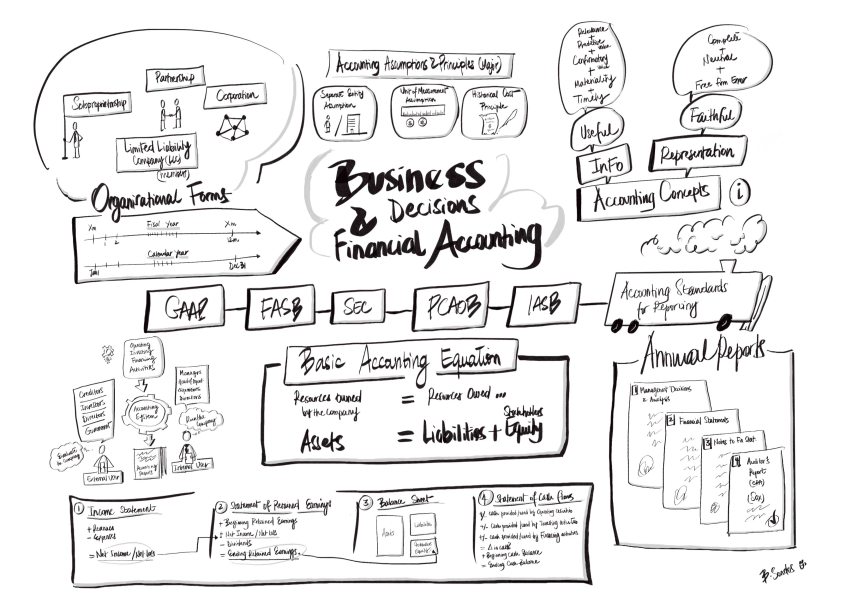


1. Business Decisions & Financial Accounting
This diagram introduces financial accounting and how it helps businesses make decisions. It explains different organizational forms (sole proprietorship, partnership, corporation) and the basic accounting equation:
Assets = Liabilities + Equity
It also shows accounting standards (like GAAP) and the main financial reports used by companies.
2. Balance Sheet
The balance sheet shows a company’s financial position at a specific time.
It has three main parts:
-
Assets: What the company owns (cash, accounts receivable, buildings, land, equipment).
-
Liabilities: What the company owes (notes payable, salaries payable, accounts payable).
-
Stockholders’ Equity: Owners’ claim in the business (retained earnings and common stock).
3. Income Statement
The income statement shows a company’s financial performance over a period of time.
It includes:
-
Revenue: Money earned from sales or services.
-
Expenses: Costs like advertising, salaries, utilities.
The result is Net Income, calculated as:
Net Income = Revenues − Expenses
4. Adjustments & Closing Process
This diagram explains the accounting cycle adjustments and closing process.
Key ideas include:
-
Accruals and deferrals used to record revenues and expenses in the correct period.
-
Adjusted trial balance used to prepare financial statements.
-
The closing process, which closes temporary accounts (revenues, expenses, dividends) to retained earnings and prepares the next accounting period.
- Quality checked by Drawify
- Future updates
- 24 x 7 support from Drawify
Price is in US dollars and excludes tax and handing fees

Sondos Bannouri
Business, Accounting, education, art
3
Followers
Template preview
Get visualisation tips every week
Subscribe to the Drawify Newsletter, and feed your creativity with visualisation tips and techniques, as well as the latest Drawify workshops, news and resources.